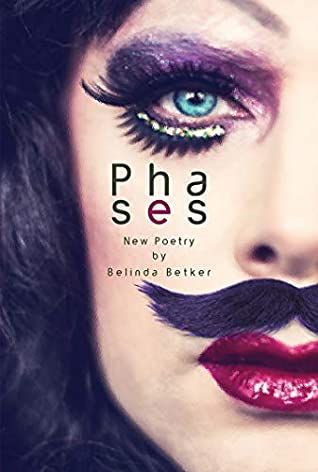
Most poetry collections are organized by theme or mood. Belinda Betker’s Phases is organized like a life. It starts with a girl at her grandfather’s funeral and ends with a drag king tearing up the stage, and everything in between follows one woman’s slow, sometimes painful route to herself.
Coteau Books published it in 2019, and the title works on several levels at once. There are the phases of the moon, which come back in the book. There are the phases of a woman’s body, from first period to hysterectomy. And there’s the phrase every queer person has heard at least once: “It’s just a phase.”
The first section belongs to a girl leaving childhood. She’s a tomboy. Her body is changing in ways she didn’t ask for, she gets her first period, and she finds her father’s magazines and comes away uneasy about her own body. Small details carry a lot of weight here. She stands up to a bully. She is very good at tying a tie. Anyone who was that kind of girl will recognize her immediately.
The second section jumps to adulthood, and it’s the hardest part of the book. The speaker is in an unhappy marriage, going to counselling, clashing with her son over cooking at a family gathering. Then an ultrasound finds pre-cancerous tumours, and she has a hysterectomy. Betker writes about the surgery, the recovery, her resentment at her husband’s lack of support, and a loss she compares to the dark side of the moon.
Then the third section, titled “Deviation,” opens a door. There’s an awkward school dance and a growing sense that she’s going to cross over. There’s a painful tattoo, the dangerous rocks at Peggy’s Cove, a first kiss with a woman, and a first visit to a gay bar where she flirts with women, gay men and drag queens alike. A visit to a straight men’s strip club, on the other hand, does nothing for her at all. Several erotic poems about her lover follow, and the speaker who seemed so trapped in the middle of the book is suddenly very much alive.
The closing section, “Why a parade?”, widens the lens. It moves through people of every age, from childhood to old age, who struggle with gender identities that don’t fit the boxes they were handed. The final poems belong to a drag king in full performance, which is about as joyful an ending as a poetry collection can have.
That arc is what makes Phases useful for a lot of readers. Late-blooming lesbians and women who came out after marriage and children don’t always see their stories told. They’re often told as tragedy or as an afterthought. Here the late coming-out is the point, and it ends in a parade.
This is for women who came out later in life, for readers interested in gender nonconformity across a whole lifespan, and for Canadian poetry readers who like their collections grounded in recognizable places and ordinary days.
A few questions for the comments. Did anyone ever tell you it was “just a phase”? Do you read poetry collections straight through like a story, or dip in and out? And what’s your take on the title question: why a parade?
Publication details are on the Phases entry in the Lesbian Bibliography.