Take a look at Lauren Hough’s work history. United States Air Force airman. Cable installer. Bouncer at a gay club. Writer. Now add the childhood: raised in a cult that moved her family around Germany, Japan, Texas and Chile. That’s not a résumé. That’s the outline of a picaresque novel, except it all happened, and Hough wrote it up as essays.
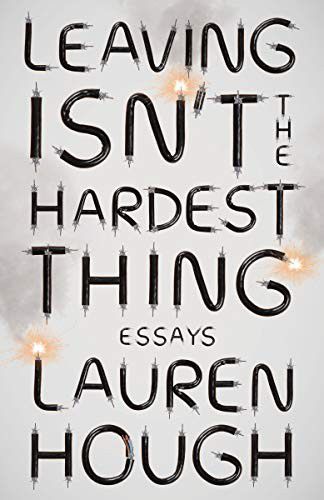
Leaving Isn’t the Hardest Thing came out in 2021 and quickly became one of the most talked-about essay collections of the year. Many readers first found Hough through a viral essay she wrote about her years as a cable installer, a wry, angry, very funny look at what you see inside other people’s homes. The book expands on that voice and turns it on her whole life.
The cult was The Children of God, a religious group with a notorious history. Hough grew up inside it and didn’t really understand that another kind of life was possible until she left for good. The /books entry describes what came after as a string of reinventions: revisiting the places she’d lived as a child, time in solitary confinement, many relationships with women, drug use and, eventually, writing. Throughout it, she travels across America, depending on friends, family and strangers, trying to build a self while her past keeps showing up uninvited.
The title is the thesis. Getting out is one thing. Figuring out who you are once you’re out, with no road map and a head full of the cult’s rules, is the hard part. That’s true of more than cults. Anyone who has left a strict religion, a small town, a bad marriage or the military will recognize the feeling.
The essays are often described as sharp, brave and funny, and the humour is key. Hough writes about terrible things with a dry, deadpan edge, like someone telling you about the worst day of her life while waiting for the bus. She writes about queerness, about ecstasy in both senses of the word, and about what it actually means to be free. The bibliography rates the book Good.
The structure suits her. Each essay can stand alone, so you can read it in pieces. Read together, they build a portrait of someone who has been many people and is still figuring out which one is real.
This is for memoir readers who like voice above all, survivors of high-control religious groups, and lesbians who served in the military or worked blue-collar jobs and rarely see themselves on the page. It’s also for anyone who enjoys essays that are funny and furious at once.
Fair warning: it covers abuse, violence and addiction, sometimes in detail.
Now it’s your turn. What’s the oddest job you’ve ever had, and what did it teach you about people? Is leaving the hardest part, or what comes after? And do you prefer memoirs as one continuous story or as essays you can dip into?
Full details are on the Leaving Isn’t the Hardest Thing entry in the Lesbian Bibliography.