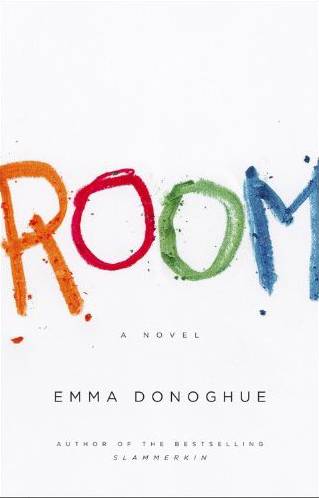
Let’s address the obvious question first. Room isn’t a lesbian novel. There’s no lesbian romance in it, no queer subplot, nothing that would get it shelved in the LGBTQ section of your local bookstore. So why is it in the Lesbian Bibliography?
Because of who wrote it. Emma Donoghue is one of the most important lesbian writers working today, and Room is the book that made her famous around the world. Leaving it out of her story would be like leaving The Talented Mr. Ripley out of Patricia Highsmith’s.
The novel, published in 2010, is narrated by five-year-old Jack. For Jack, as the /books entry puts it, “Room is the entire world.” He lives there with his Ma, who has been held captive in it by a man called Old Nick for seven years. Ma has built a whole life for Jack inside those walls, with games, stories and routines, but she knows it isn’t enough for either of them. So she plans an escape that depends on Jack’s courage and a lot of luck. What she doesn’t anticipate is how unprepared they both are for the plan to work.
The narration is the masterstroke. Telling a story about captivity and abuse through the eyes of a child who doesn’t understand that anything is wrong is a huge risk. It could easily have been gimmicky or exploitative. Instead, it’s what makes the book bearable and devastating at the same time. Jack’s wonder and Ma’s endurance sit side by side, and the reader understands what Jack can’t.
Room was shortlisted for the Booker Prize. In 2015 it became a film, with a screenplay by Donoghue herself and Brie Larson winning the Academy Award for Best Actress as Ma. It’s the kind of success most novelists never see.
For readers who know Donoghue only from Room, there’s a whole other shelf to discover. Long before it, she was writing lesbian fiction: contemporary Irish novels like Stir-fry and Hood, and historical work like The Sealed Letter, about a Victorian divorce scandal. She has also written non-fiction about lesbian history. Her later novel Learned by Heart, about the young Anne Lister, is also in the bibliography. Born in Dublin and long based in London, Ontario, she’s also a Canadian literary presence, which gives Ontario readers a little extra claim on her.
So think of this post as a doorway. If you loved Room, the rest of Donoghue’s work is waiting, and a lot of it is the queer fiction she started with. If you’ve read her lesbian novels and skipped Room because it didn’t sound like your kind of book, it’s worth a look. The same skills are at work: deep empathy, meticulous research and an eye for people trapped by circumstance.
This is for readers who loved the film and haven’t read the novel, for Donoghue fans who want her complete range, and for book clubs looking for a novel that sparks real discussion. Content note: the book deals with abduction and sexual abuse, though it’s never graphic.
In the comments: did you read Room or see the film first? Do you seek out the other work of lesbian authors even when it isn’t queer? And which Donoghue book would you hand to a first-time reader?
Publication details are on the Room entry in the Lesbian Bibliography.