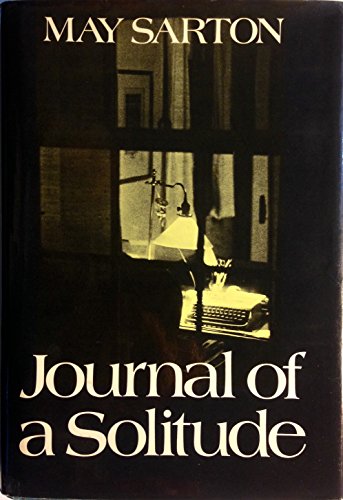
“Begin here. It is raining.”
That’s how May Sarton opens Journal of a Solitude. If you’ve ever daydreamed about a farmhouse in New Hampshire, a garden, a stack of books and nobody knocking on the door, those five words read like an invitation. Pull up a chair. Put the kettle on.
Then Sarton shows you what solitude looks like from the inside, and it’s not a Pinterest board. It’s weather. It’s weeding. It’s crying at the kitchen table and then writing a poem about crying at the kitchen table. It’s a woman nearing sixty, arguing with herself page after page about whether being alone is the cure or the disease.
W. W. Norton published the journal in 1973. It covers roughly a year in Sarton’s house in Nelson, New Hampshire, a house she had already written about in Plant Dreaming Deep (1968). Readers adored that book. They adored it so much they wrote to tell her how peaceful her life sounded.
Journal of a Solitude is, in part, her reply to those letters. Sarton is clear that the earlier book left things out, mainly the anger and the depression, so this one puts them back. The garden is still here, along with the seasons, the visitors, the books and the poems she’s wrestling with. Now you also get the bad days, recorded with the same attention she gives the flower beds.
What the jacket didn’t mention was the lesbian context. Sarton had already come out, in her own sideways fashion, with the 1965 novel Mrs. Stevens Hears the Mermaids Singing, about an aging poet looking back on the women who inspired her work. She later said that book cost her professionally.
In the journal, the woman she loves at the time appears only as “X.” Sarton writes about the relationship, its storms and its pull, without ever naming her. That single letter carries a lot of weight. It belongs to a woman who had already paid for being open and was choosing exactly how much more to say.
That’s part of why the book found such a devoted readership among women in the 1970s and 1980s. It’s a lesbian life on the page without being a coming-out story. Nobody is hiding in a closet. Somebody is simply living alone, by choice, and declining to apologize for it. It came out the same year Naiad Press was founded, when lesbian readers were only starting to get presses of their own.
It’s a natural pick for writers who suspect solitude would fix their productivity problem. It might, though Sarton is very clear about the price. It also suits readers of Mary Oliver and garden journals, and anyone curious about lesbian literary history from the years just before lesbian publishing took off. If the journal hooks you, it was only the first. The House by the Sea (1977) picks up after her move to York, Maine, and she kept publishing journals into her eighties.
A few questions for the comments. Is solitude a privilege, a discipline or a hiding place, and can it be all three in the same week? Sarton names her friends, her visitors and her flowers, but never the woman she loves. What does that choice tell you? And has a book ever talked you out of a fantasy you were attached to?
Publication details, format and edition information are on the Journal of a Solitude entry in the Lesbian Bibliography.