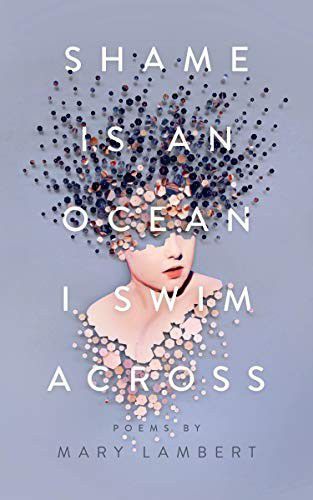
If you were anywhere near a radio in 2012 or 2013, you’ve heard Mary Lambert. She sang the chorus of Macklemore and Ryan Lewis’s “Same Love,” the marriage equality anthem that became a massive hit and a Grammy nominee. Her few lines in that song reached more people than most poets reach in a lifetime.
What a lot of listeners didn’t know was that Lambert was already a poet. She started out as a spoken word performer before her singing career took off, and she followed “Same Love” with “She Keeps Me Warm,” a love song about a woman that built on the chorus she’d sung for someone else. Shame Is an Ocean I Swim Across, published in 2018, is her first book of poems.
The title tells you a lot about what’s inside. Lambert writes about sexual assault, mental illness and learning to accept her body. She’s been open in interviews about living with bipolar disorder and about surviving abuse, and the poems don’t soften any of it. The /books entry describes the book as “beautiful and brutally honest.” It presents it as encouragement for anyone who has been hurt or overwhelmed and found a way back.
The ocean metaphor is a good one. Shame doesn’t go away because you decide it should. You have to get across it, stroke by stroke, sometimes swallowing water. Lambert’s book seems to be about that crossing rather than about arriving on the other side and pretending it was easy.
One detail worth knowing: the publisher is Feiwel & Friends, a Macmillan imprint best known for books for young readers. That makes sense. Lambert’s audience skews young, and a lot of her listeners are exactly the queer teens and twenty-somethings who could use a book like this. But adult readers shouldn’t write it off. Survivors of every age will recognize what she’s describing.
The bibliography rates it Good, and it sits comfortably next to collections by other performers who moved from stage to page, like Andrea Gibson’s Take Me With You and Staceyann Chin’s Crossfire, both also in the bibliography. All three writers came up performing their work out loud, and all three bring a directness to the page that more academic poets sometimes avoid.
This is for Mary Lambert fans, obviously. It’s also for survivors of sexual violence looking for words for their own experience, and readers living with mental illness who are tired of seeing it romanticized or ignored. If you know a young queer woman who’s struggling, this could be a gentle book to leave on her nightstand.
A content note: because the book deals directly with assault and mental illness, some readers may want to pace themselves.
And a few questions for the comments. Did you know Mary Lambert was a poet before you read this? Do you think songs and poems do different work, or the same work in different clothes? And what’s a song that helped you get through something hard?
Publication details are on the Shame Is an Ocean I Swim Across entry in the Lesbian Bibliography.