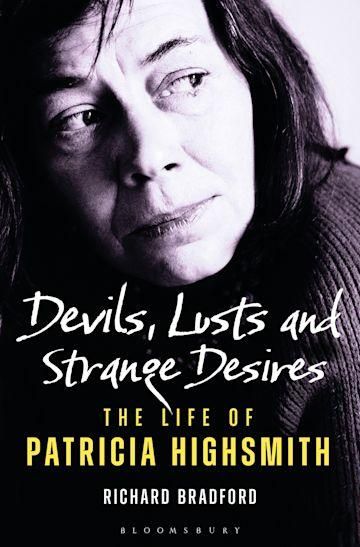
On New Year’s Eve in 1947, Patricia Highsmith raised a toast. She drank to “all the devils, lusts, passions, greeds, envies, loves, hates, strange desires” and wished to be left free of her inner struggles. Richard Bradford used that toast as the title of his 2021 biography, and it’s hard to imagine a better one. Highsmith’s demons weren’t just in her fiction. They lived with her.
For noir readers, Highsmith needs no introduction. She wrote Strangers on a Train, which Hitchcock turned into a classic. She created Tom Ripley, one of the most unsettling characters in crime fiction, a charming young man who kills people and gets away with it, book after book. Her novels are less about solving crimes than about sliding inside the minds of people who commit them, and they still feel modern.
She also wrote Carol, first published in 1952 as The Price of Salt under the pseudonym Claire Morgan. It’s a landmark of lesbian fiction, partly because, unlike most lesbian novels of the time, it doesn’t end in death or despair. The 2015 film with Cate Blanchett and Rooney Mara introduced it to a whole new audience.
So Highsmith should be an easy icon for lesbian readers. Bradford’s biography argues that she isn’t. The /books entry lays it out plainly. Her place as an LGBT icon is complicated by how she treated the people around her, including the friends and lovers she was cruel to and exploited. Bradford also deals directly with her alcoholism, her racism, her antisemitism, her misogyny and her self-loathing.
That makes for uncomfortable reading, and it’s meant to. Bradford’s argument is that earlier biographers hadn’t fully looked at how her lesbianism, her personality and her fiction fit together. He reads her bestsellers against the mess of her private life. The result suggests that the coldness and cruelty in her characters didn’t come from nowhere.
The timing of the publication is a nice touch. The book came out on January 19, 2021, the hundredth anniversary of Highsmith’s birth.
For anyone who writes crime fiction, there’s an extra question running underneath the whole book. How much of a dark writer’s darkness is craft, and how much is just the writer? Highsmith seems to have been an unusually extreme case. Reading about her life might make you look at your own villains a little differently.
The bibliography rates it Good. It sits alongside other books here about complicated lesbian lives, which are often more interesting than the tidy ones.
This is for Highsmith fans and Ripley obsessives, for readers of Carol who want to know more about the woman who wrote it, for crime and noir writers interested in where dark fiction comes from, and for anyone who likes a biography that doesn’t flatter its subject.
A question or two for the comments. Can you separate a writer’s work from her life, or does knowing change how you read her? Is Highsmith still a queer icon despite all this, or because of the complexity? And which Highsmith adaptation is your favourite, Hitchcock, Carol or one of the many Ripleys?
Full details are on the Devils, Lusts and Strange Desires entry in the Lesbian Bibliography.