You’ve probably seen the movie. In 1991, Fried Green Tomatoes became a surprise hit, with Kathy Bates as a frustrated housewife, Jessica Tandy as the storyteller in the nursing home, and Mary Stuart Masterson and Mary-Louise Parker as Idgie and Ruth, the two women at the heart of the story. People still quote it. Some of us still yell “Towanda!” in parking lots.
But did the movie tell you Idgie and Ruth were in love?
That’s the question that has followed the film for more than thirty years. The answer is: sort of, if you were paying attention. There’s a famous food fight scene that plenty of viewers read as a love scene, and the film even won a GLAAD Media Award. But the word “lesbian” never comes up, and a lot of the audience walked out thinking they’d watched a story about two very close friends.
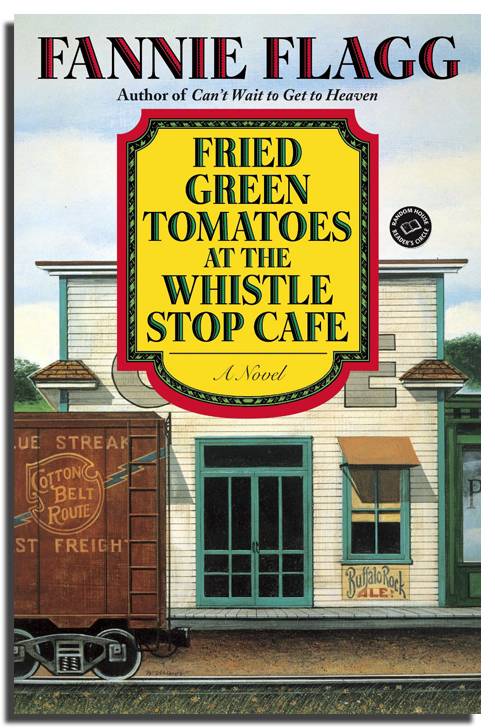
The novel, which Fannie Flagg published in 1987, is clearer. It doesn’t use the word either. As the review on the /books entry notes, the book never labels its women as lesbians and focuses on love and companionship instead. But it leaves much less doubt. Idgie and Ruth are an unspoken couple, raising a child together and running a café that shelters everyone the world is cruel to.
The story works in two time frames. In the present, Evelyn Couch is an unhappy housewife visiting her mother-in-law in a nursing home in Alabama. There she meets Ninny Threadgoode, an old woman who tells her stories about Whistle Stop, a small town during the Depression. Ninny’s stories are about Idgie, a wild tomboy, and Ruth, a beautiful woman escaping an abusive husband, and the café they ran together. It fed poor people, Black people turned away elsewhere and women on the run. It stood up to the Klan, to a violent husband and to the local sheriff.
Evelyn listens, and slowly she starts to change her own life. That’s the engine of the book. One woman’s stories about two other women give a third woman the courage to stop being invisible.
There’s a nice bit of background here too. Flagg herself was in a relationship with Rita Mae Brown in the 1970s, which gives the book’s quiet love story a little extra weight for readers who know.
This is for readers who loved the movie and never read the book, for anyone who likes Southern storytelling, and for book clubs that want an easy way into a conversation about how queer love gets written in and out of popular stories. And yes, there are recipes at the back.
So let’s settle this in the comments. When you first saw the movie, did you read Idgie and Ruth as a couple? Is it better that the book leaves the word unsaid, or is that a cop-out? And have you ever yelled “Towanda!” in public?
The full entry, with a review, is on the Fried Green Tomatoes at the Whistle Stop Cafe page in the Lesbian Bibliography.