Before we get to the book, a quick history lesson. In the late 1970s and through the 1980s, feminists fought a long, bitter argument that came to be known as the sex wars. On one side were activists who saw pornography, and much of sexuality as it was then practised, as a tool of male power. On the other were sex-positive feminists, many of them lesbians, who argued that women deserved the freedom to explore desire on their own terms, kink, toys, butch/femme and all. Conferences were picketed. Friendships ended. Some of those arguments still haven’t fully cooled.
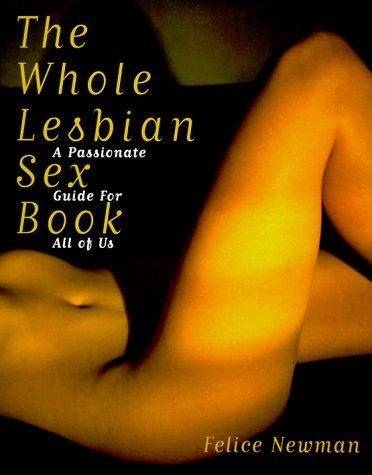
The Whole Lesbian Sex Book: A Passionate Guide for All of Us, published by Cleis Press in 1999, came out of the other side of that fight. The /books entry presents it as the first lesbian sex guide written after the sex wars, and you can see it in the book’s attitude. It doesn’t lecture you about what good feminist sex looks like. It assumes you’re an adult who can decide for yourself, and it gives you the information to do that well.
Felice Newman was in a good position to write it. She co-founded Cleis Press in 1980, and the press became one of the main publishers of lesbian and queer sexuality writing in North America. By 1999 she’d spent nearly two decades thinking about how to write about sex for women honestly, without either sanitizing it or turning it into a political test.
The book covers the basics, techniques, advice and emotional support, plus a fair amount of humour. It’s described as witty, personal, explicit, concise and playful, with sidebars, excerpts and resource lists. That combination matters. Sex manuals can be clinical or cringeworthy, and it takes skill to be clear and warm at the same time.
What really stands out is the “all of us” in the subtitle. The book was written for lesbian and bisexual women of different ages, relationship situations and levels of experience. It was also written for trans women and traditionally gendered women alike, which was not common in 1999. Butch/femme identity, bisexuality and gender identity aren’t tucked into a chapter at the back. They’re woven into the practical advice throughout. The book tries to bring theory and practice together, which is a fancy way of saying it treats your identity as part of your sex life, not separate from it.
It’s worth remembering how few resources existed back then. There was no endless supply of online advice. Many lesbians learned about sex from a handful of books passed between friends, and a guide like this could be a genuine lifeline. A second edition followed a few years later, so check which one you’re picking up.
This is for women who are newly out and want a straightforward guide. It’s also for longtime lesbians curious how the conversation has changed, readers interested in the history of feminist sex debates, and anyone who wants a sex book that’s funny as well as useful.
If the subject interests you, Cleis’s erotica anthologies, including Girls Who Score and Best Lesbian Erotica of the Year, are also in the bibliography.
Tell me in the comments. Where did you learn about lesbian sex, from books, friends, trial and error, or all three? Did you live through the sex wars, and which side were you on? And what book would you hand to a woman who just came out?
Full details are on The Whole Lesbian Sex Book entry in the Lesbian Bibliography.