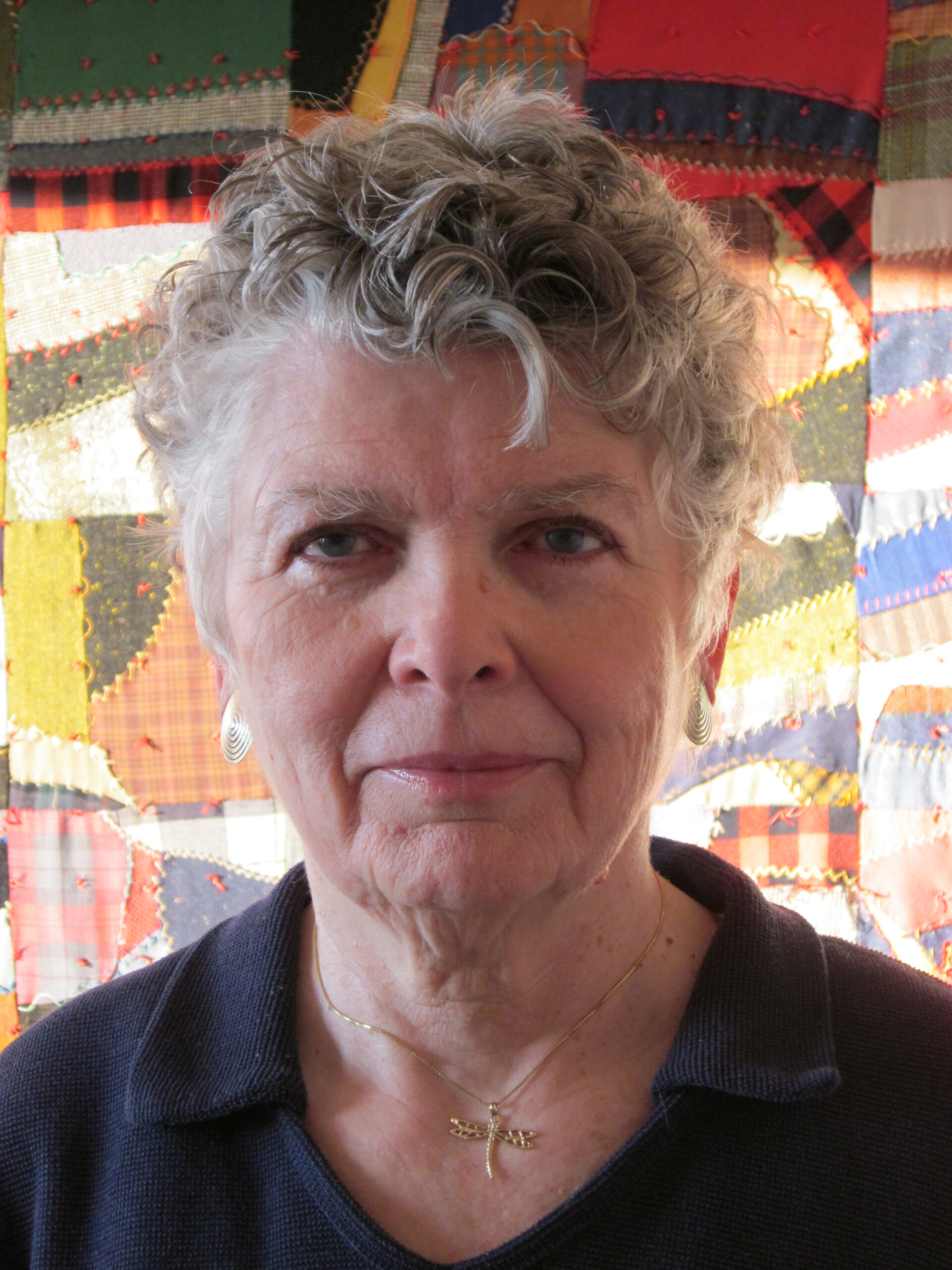
Minnie Bruce Pratt, the American poet, essayist and activist best known for the poetry collection Crime Against Nature, died on July 2, 2023.
Born on September 12, 1946, in Selma, Alabama, Pratt grew up in nearby Centreville. She earned a bachelor’s degree from the University of Alabama in 1968 and a Ph.D. in English from the University of North Carolina at Chapel Hill in 1979, and she went by the double first name Minnie Bruce. After teaching at a series of universities, she was a professor in the writing program and the gender studies department at Syracuse University from 2005 until her retirement in 2015, and she helped develop the university’s LGBT studies program.
The Sound of One Fork (1981), her first book of poetry, was published through Night Heron Press, the small press she co-founded. It grew out of the women’s liberation and lesbian and gay liberation movements of the 1970s and followed her return to writing poetry in 1975.
We Say We Love Each Other (1985) is a collection of poems about the search for a place to live as a lesbian, capturing the eroticism and sensuality of love for another woman.
Crime Against Nature (1990) gathers poems of despair, shame, sexual joy, rage and hope written after she came out as a lesbian and lost custody of her two sons. Its title echoes the phrase used in the North Carolina statute that criminalized same-sex relationships. The Academy of American Poets chose it as the Lamont Poetry Selection in 1989, and it was named a New York Times Notable Book of the Year.
Rebellion: Essays 1980-1991 (1991) explores the terrain of personal and political change. It includes her essay “Identity: Skin Blood Heart,” first published in Yours in Struggle (1984), which she wrote with Elly Bulkin and Barbara Smith and which the Publishing Triangle named in 2004 one of the 100 best lesbian and gay nonfiction books.
S/He (1995) is a book of lyrical vignettes, part erotic memoir, set at the crossroads of feminist analysis, queer theory and transgender liberation.
Walking Back Up Depot Street (1999) tells the story of the segregated rural South and of a white woman leaving that home for the postindustrial North. ForeWord magazine named it Gay/Lesbian Book of the Year, and it was a finalist for a Lambda Literary Award.
The Dirt She Ate: Selected and New Poems (2003) gathers work from her earlier collections along with thirteen new poems. It won the Lambda Literary Award in Lesbian Poetry.
Her collection Inside the Money Machine (2011), poems about working people under 21st-century capitalism, received the Publishing Triangle’s Audre Lorde Award for Lesbian Poetry.
Magnified (2021), her most recent book, is a collection of love poems written around the illness and death of her spouse, Leslie Feinberg.
A National Endowment for the Arts grant awarded to Pratt, Audre Lorde and Chrystos drew objections from Senator Jesse Helms, who argued that the work of the three lesbian writers was obscene and unfit for federal funding. The NEA disagreed, and the three later received a grant from the Fund for Free Expression.
Complete Bibliography
Poetry: The Sound of One Fork (1981), We Say We Love Each Other (1985), Crime Against Nature (1990), Walking Back Up Depot Street (1999), The Dirt She Ate: Selected and New Poems (2003), Inside the Money Machine (2011), Magnified (2021)
Nonfiction: Yours in Struggle: Three Feminist Perspectives on Anti-Semitism and Racism (1984, with Elly Bulkin and Barbara Smith), Rebellion: Essays 1980-1991 (1991), S/He (1995)
Minnie Bruce Pratt died of glioblastoma on July 2, 2023, in Syracuse, New York. She was 76. Her spouse, Leslie Feinberg, the author of Stone Butch Blues, died in 2014; the two met in 1992 and married in 2011. Pratt is survived by her sons, Benjamin and Ransom Weaver, and five grandchildren.
Further Reading
Studies in the collection that discuss Pratt include Sandra Pollack and Denise D. Knight’s Contemporary Lesbian Writers of the United States, which includes an entry on her, and Biddy Martin’s Femininity Played Straight.