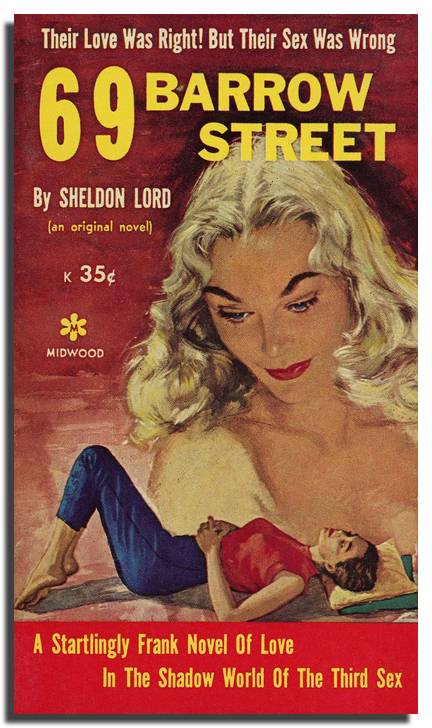
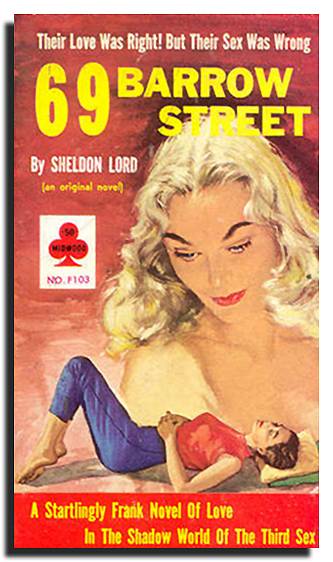
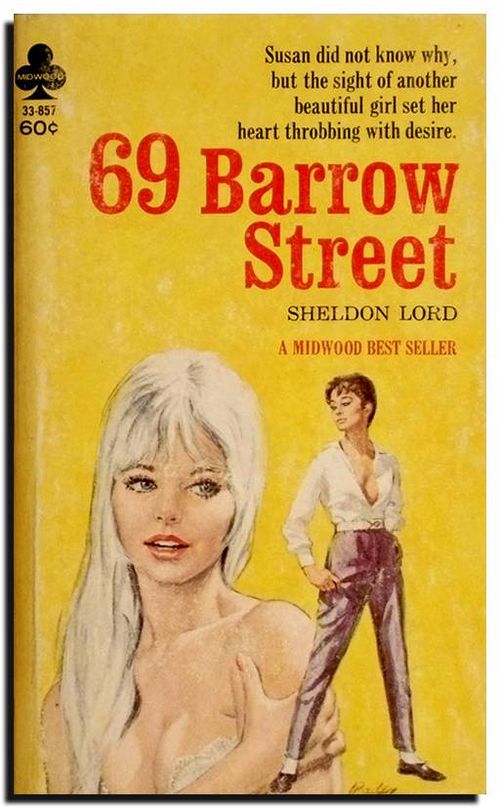
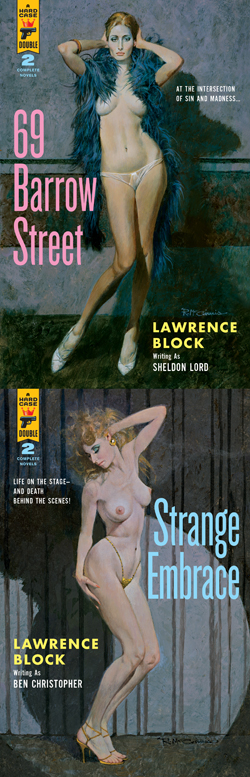
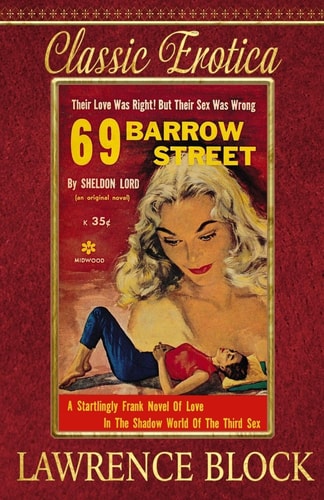
In 69 Barrow Street, Sheldon Lord (Lawrence Block) delivers another slice of mid-century Greenwich Village life, blending the “small town in a big city” atmosphere with the transgressive edge typical of 1960s pulp. The story centers on a specific address that serves as a crossroads for a variety of “lost souls” and bohemians. While the plot touches on the era’s standard vices, it focuses heavily on the interpersonal entanglements and shifting sexual dynamics of the house’s inhabitants. Like its predecessor, 21 Gay Street, the narrative uses the setting as a pressure cooker where traditional mid-century morality is discarded in favor of experimental living and hidden desires.
This book is a key artifact of the “paperback original” era, specifically within the subgenre of urban “vice” novels. Its importance lies in the mapping of a lesbian geography; by using a real Greenwich Village address, the book contributed to the mythos of the Village as a safe harbor for queer women. While written for a general (often voyeuristic) audience, these books documented the existence of lesbian social circles and living arrangements—like the “roommate” setups—that were common in the pre-Stonewall era. It serves as a historical window into how lesbianism was perceived by the mainstream: as something exotic, urban, and intrinsically tied to the bohemian avant-garde