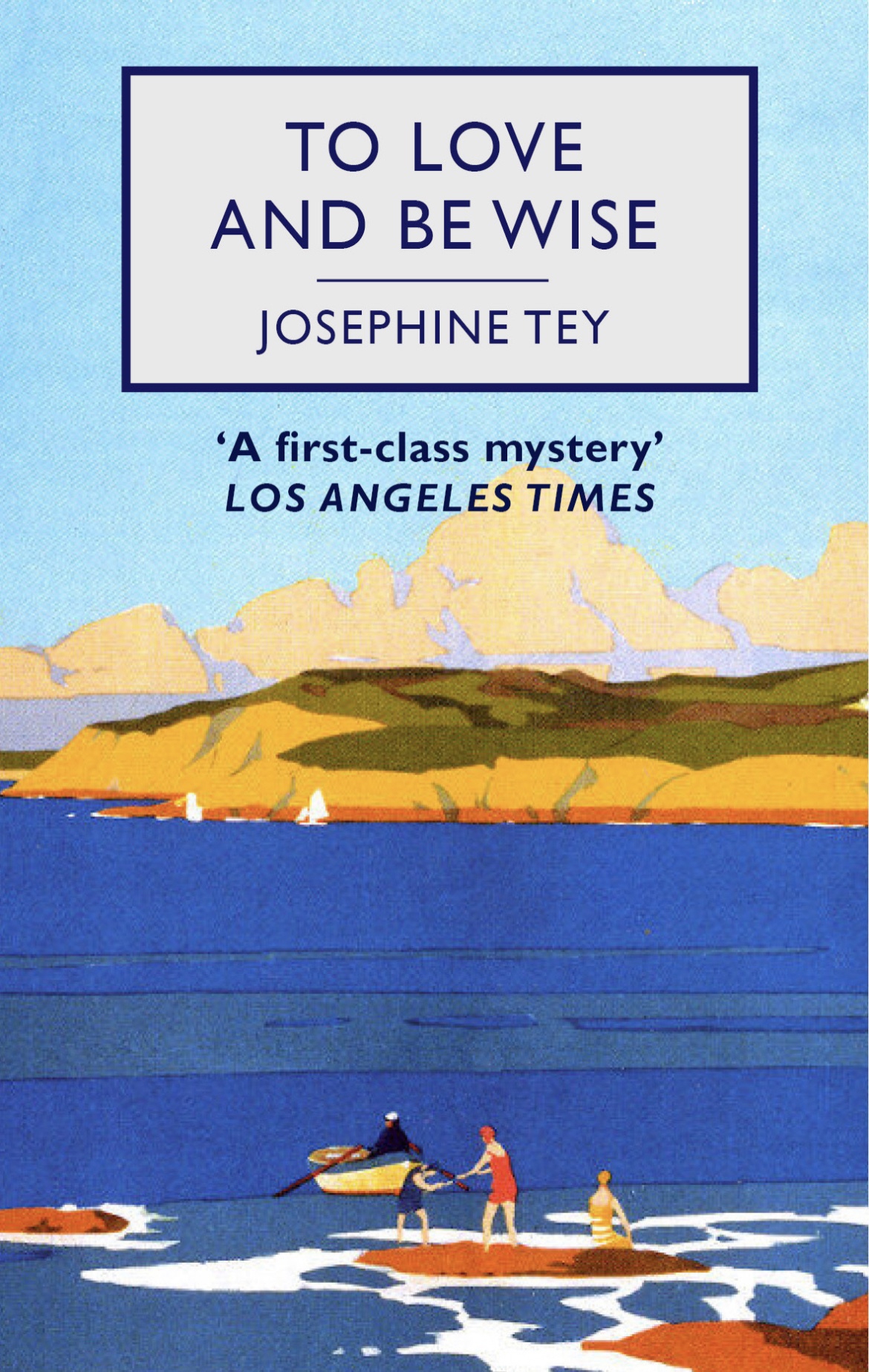
To Love and Be Wise (1950) was written by Elizabeth MacKintosh under her famous pen name, Josephine Tey (the ‘Tae’ in your query likely stems from a phonetic spelling or a scanner typo).
While it is structured as a classic Golden Age British detective mystery featuring Inspector Alan Grant, the entire plot hinges directly on trans-masculine presentation, female gender fluidness, and sapphic attraction. The mystery revolves around a dashing, beautiful young American male photographer named Leslie Searle who arrives in an English artistic colony, charms everyone, and then vanishes. It is ultimately revealed that Leslie Searle is actually a woman presenting seamlessly as a young man. The book heavily explores the homoerotic tension and intense infatuations that both men and women in the village develop toward Leslie before her true sex is revealed.
A seminal text in the history of queer detective fiction, Josephine Tey s 1950 mystery subverts Golden Age tropes by centering its narrative on gender transgression and same-sex attraction. When the devastatingly handsome young American photographer Leslie Searle vanishes from a tight-knit English arts colony, Inspector Alan Grant is called in to investigate a suspected murder. The investigation uncovers a web of intense romantic fixation, revealing that Leslie had systematically charmed and manipulated the colony’s residents disrupting both heterosexual engagements and sparking latent homoerotic desires. The novel s eventual resolution hinges on a radical mid-century depiction of female masculinity, cross-dressing, and gender performance, making it a crucial historical piece for studying sapphic subtext and gender fluidity in classic crime fiction.
While it is structured as a classic Golden Age British detective mystery featuring Inspector Alan Grant, the entire plot hinges directly on trans-masculine presentation, female gender fluidness, and sapphic attraction. The mystery revolves around a dashing, beautiful young American male photographer named Leslie Searle who arrives in an English artistic colony, charms everyone, and then vanishes. It is ultimately revealed that Leslie Searle is actually a woman presenting seamlessly as a young man. The book heavily explores the homoerotic tension and intense infatuations that both men and women in the village develop toward Leslie before her true sex is revealed.
A seminal text in the history of queer detective fiction, Josephine Tey s 1950 mystery subverts Golden Age tropes by centering its narrative on gender transgression and same-sex attraction. When the devastatingly handsome young American photographer Leslie Searle vanishes from a tight-knit English arts colony, Inspector Alan Grant is called in to investigate a suspected murder. The investigation uncovers a web of intense romantic fixation, revealing that Leslie had systematically charmed and manipulated the colony’s residents disrupting both heterosexual engagements and sparking latent homoerotic desires. The novel s eventual resolution hinges on a radical mid-century depiction of female masculinity, cross-dressing, and gender performance, making it a crucial historical piece for studying sapphic subtext and gender fluidity in classic crime fiction.
Details
| Title: To Love and Be Wise |
| Author: Josephine Tey |
| ISBN: 9781980000000 |
| Subtitle: |
| Genre: Crime; Mystery |
| Subject(s): |
| Publication Date: 43092 |
| Original Publication Date: |
| Publisher: Independently published |
| Language: English |
| Format: Paperback |
| Pages: 190 |
| Rating: |
| Notes: Cover may not match edition. |
| Book_ID: 107020 |