SAN FRANCISCO CHRONICLE Here is the first collection of female erotic writing through the ages, and the first to reveal the form’s amazing scope–as multifaceted as the sexuality of women themselves. EROTICA reveals the history of women’s erotic writing and reexamines the literary expression of female sexuality. Included in this unique anthology are: Kathy Acker, Jane Austen, Anne Boleyn, Kate Copin, H.D., Radclyffe Hall, Edna O’Brien, Vita Sackville-West, Stevie Smith, Marina Tsvetayeva, Virginia Woolf, and many others.
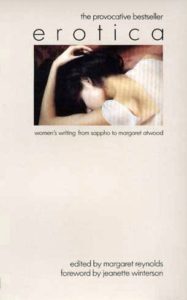
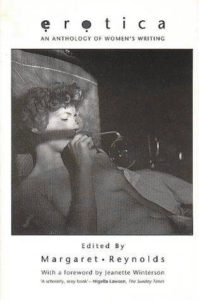
Erotica: Women's Writing from Sappho to Margaret Atwood, edited by Margaret Reynolds, was published by Pandora Press in London in 1990 and by Fawcett Columbine in the United States. Billed as the first anthology to uncover the full range of erotic writing by women, it is arranged by themes such as desire and taboo and runs from Sappho, Marie de France and Christine de Pizan to Colette, Anaïs Nin, Marguerite Duras, Kathy Acker and Marilyn Hacker.
Lesbian writing runs through it: Sappho, Radclyffe Hall, Vita Sackville-West, Gertrude Stein, Charlotte Mew, Monique Wittig, Maureen Duffy, Mary Dorcey and Jeanette Winterson are among the contributors. Reynolds, a scholar of Sappho who later wrote The Sappho Companion, places women's desire for women within the whole history of women's erotic writing rather than in a separate category.

Comment
Erotica: Women's Writing from Sappho to Margaret Atwood, edited by Margaret Reynolds, was published by Pandora Press in London in 1990 and by Fawcett Columbine in the United States. Billed as the first anthology to uncover the full range of erotic writing by women, it is arranged by themes such as desire and taboo and runs from Sappho, Marie de France and Christine de Pizan to Colette, Anaïs Nin, Marguerite Duras, Kathy Acker and Marilyn Hacker.
Lesbian writing runs through it: Sappho, Radclyffe Hall, Vita Sackville-West, Gertrude Stein, Charlotte Mew, Monique Wittig, Maureen Duffy, Mary Dorcey and Jeanette Winterson are among the contributors. Reynolds, a scholar of Sappho who later wrote The Sappho Companion, places women's desire for women within the whole history of women's erotic writing rather than in a separate category.