This courageous early work of lesbian fiction (1951) tells the gripping story of two women torn between desires and taboos in the years leading up to the Nazi occupation of Amsterdam. Erica, a reckless young journalist, pursues passionate but abusive affairs with different women. Bea, a reserved secretary, grows increasingly obsessed with Erica —yet denial and shame keep her from recognizing her attraction. Only Bea’s discovery that Erica is half-Jewish and a member of the Dutch resistance — and thus very much in danger — brings her closer to accepting her own feelings.
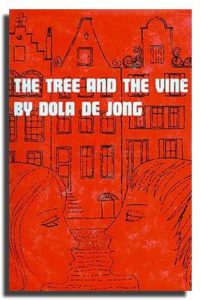
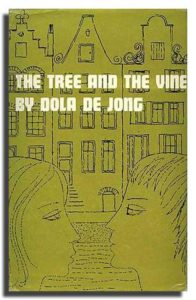
The Tree and the Vine was first published in Dutch as De thuiswacht by Meulenhoff in 1954, after being rejected as shameless and unpublishable. It appeared in English in Ilona Kinzer's translation from John Calder in London in 1961 and from Lyle Stuart in New York in 1963, and Barbara Grier rated it A. In Amsterdam in 1938, Bea, a compliant secretary, meets Erica, a reckless journalist, and is immediately drawn to her; the two women move in together but cannot live together or apart, while the Nazi occupation approaches and Erica, who is half-Jewish, joins the resistance.
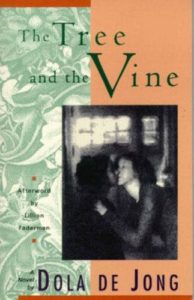
Dola de Jong (1911 to 2003), a Jewish writer who fled the Netherlands in 1940 and later won an Edgar Award, received piles of letters from married women after the novel's Dutch publication. The Feminist Press reissued it in 1996 with an afterword by Lillian Faderman, and Transit Books published a new translation by Kristen Gehrman in 2020. It was unusual for a mid-century Dutch novel to treat love between women so frankly and seriously, even though it does not give the lovers a happy ending.


Comment
The Tree and the Vine was first published in Dutch as De thuiswacht by Meulenhoff in 1954, after being rejected as shameless and unpublishable. It appeared in English in Ilona Kinzer's translation from John Calder in London in 1961 and from Lyle Stuart in New York in 1963, and Barbara Grier rated it A. In Amsterdam in 1938, Bea, a compliant secretary, meets Erica, a reckless journalist, and is immediately drawn to her; the two women move in together but cannot live together or apart, while the Nazi occupation approaches and Erica, who is half-Jewish, joins the resistance.
Dola de Jong (1911 to 2003), a Jewish writer who fled the Netherlands in 1940 and later won an Edgar Award, received piles of letters from married women after the novel's Dutch publication. The Feminist Press reissued it in 1996 with an afterword by Lillian Faderman, and Transit Books published a new translation by Kristen Gehrman in 2020. It was unusual for a mid-century Dutch novel to treat love between women so frankly and seriously, even though it does not give the lovers a happy ending.