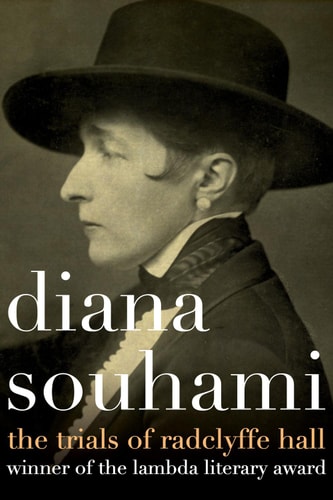
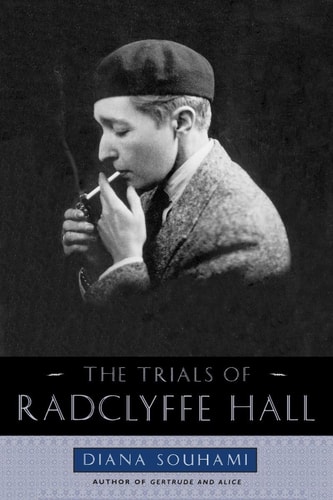
The Trials Of Radclyffe Hall by Diana Souhami
The Trials Of Radclyffe Hall | Diana Souhami | Radclyffe Hall Was Born In 1880 In Bournemouth In A House Inappropriately Named ‘sunny Lawn’. Her Mother Drank Gin In An Attempt To Terminate The Preg
Scandal in the Ink: Male and Female Homosexuality in Twentieth-Century French Literature (Cassell Lesbian and Gay Studies) | Christopher Robinson | This highly original study of homosexuality as a theme in [french [literature this century traces the development of self-image among writers and look
Confessions Of The Letter Closet | Patrick Paul Garlinger | By the beginning of the twentieth century, epistolary novels in Spain increasingly grappled with homoerotic and homosexual desire, treating it as a se
Deep Gossip | Henry Abelove | Henry Abelove is an innovative literary critic, astute historian, and pioneer in gay and lesbian studies. In this long-awaited collection, which inclu
Space and Irish Lesbian Fiction | Amy Jeffrey | Space and Irish Lesbian Fiction offers an original and much-needed study of Irish Lesbian fiction. Evaluating a wide body of Irish lesbian fiction ran
Matt Richardson | The Queer Limit of Black Memory: Black Lesbian Literature And Irresolution | The Queer Limit of Black Memory: Black Lesbian Literature and Irresolution identifies a new archive of Black women’s literature that has heretofore be
Jodie Medd | The Cambridge Companion To Lesbian Literature | The Cambridge Companion to Lesbian Literature examines literary representations of lesbian sexuality, identities, and communities, from the medieval p
Eileen Barrett; Patricia Cramer | Virginia Woolf | The last two decades have seen a resurgence of critical and popular attention to Virginia Woolf’s life and work. Such traditional institutions as The