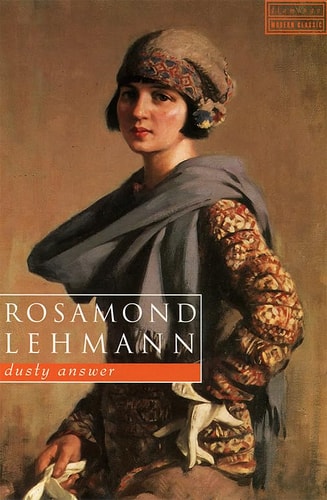
*Dusty Answer* isn't a lesbian novel in the way a modern reader might expect—you won't find a happy-ever-after or a clear, self-actualized identity arc. But it is a massive piece of the queer canon, mostly because of how much noise it made when it dropped in 1927.
At the time, the relationship between the protagonist, Judith, and her friend Jennifer at Cambridge was a genuine *succès de scandale*. It wasn't just 'hinted at'; it was intense, obsessive, and deeply uncomfortable for the contemporary public to witness. Lehmann didn't write it as a manifesto, but she wrote it with a non-judgmental empathy that felt like a threat to the 1920s status quo.
* **It’s a 'proto-queer' artifact:** Judith’s longing and the way she interacts with openly gay and lesbian characters at Cambridge capture that weird, liminal space of the interwar period—where queer life was happening, but people didn't have the language to own it or the support to sustain it.
* **The tone is 'dusty':** The title is perfect. It’s a book about the exhaustion of desire, the way people move through each other’s lives leaving only wreckage, and the specific, crushing weight of trying to find yourself when the society around you refuses to give you the blueprint.
It’s not a 'lesbian romance'—it’s a book about the messy, often disappointing reality of wanting things you aren't supposed to want. It serves as a great bridge between 'mainstream' literature and the burgeoning, often hidden, queer writing of the time.
Details
| ISBN | 9780006550082 |
|---|---|
| Copyright Date | 1996 |
| Publication Date | February 5, 1996 |
| Publisher | Flamingo |
| Format | Paperback |
| No. of Pages | 304 |
| Language | English |
| Genre | Historical Romance |
| Subject | FICTION / Literary |