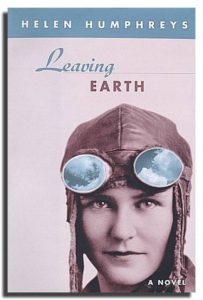
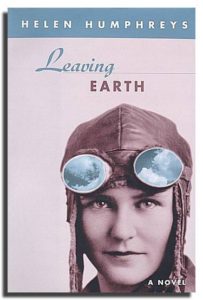
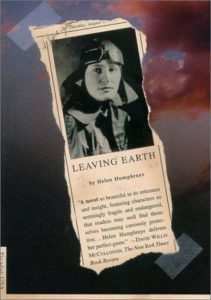
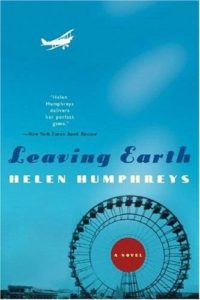
On August 1, 1933, two young women, the famous aviatrix Grace O’Gorman and the inexperienced Willa Briggs, take off in a tiny Moth biplane to break the world flight endurance record. Their plan: to circle above the city of Toronto for twenty-five days. So begins Leaving Earth, a haunting evocation of an era when heroic women defied the limitations of their sex by embarking on perilous ventures. Sponsored by the Adventure Girl Almanac, ‘Air Ace Grace’ and Willa soar above the city while below the Depression takes its toll and the shadows of the coming war lengthen. But as the days pass, the women’s ties to humanity fall away, and the growing intensity of their connection becomes as gripping as the perils that besiege them. For the two pilots, there is no speech over the wind’s rush, only an elaborate sign language in which they must invent the world anew. All the while, the endurance test wears on, its outcome jeopardized by fatigue, weather, mechanical breakdown, and the lethal efforts of a saboteur.
In this accomplished debut, Helen Humphreys displays the sensuous, shimmering language of a poet as she evokes the early days of flying and all that is fine–and base–in human nature.
Leaving Earth, the Canadian poet Helen Humphreys's first novel, was published by HarperCollins Canada in 1997 and by Metropolitan Books in the United States in 1998. On August 1, 1933, the celebrated aviator Grace O'Gorman, known as Air Ace Grace, and the inexperienced Willa Briggs take off in a tiny Moth biplane to break the world flight endurance record by circling Toronto Island, refuelled from the air, for weeks on end. Below them, twelve-year-old Maddy Stewart, whose family runs the amusement park at Hanlan's Point, watches and adores Grace.
The novel won the City of Toronto Book Award in 1998 and was a New York Times Notable Book. Reviewers praised its lyrical, poetic prose and its suspense; Quill and Quire observed that Willa and Maddy, with their twin passions for Grace, give the story its alternating points of view from above and below. The deepening bond between the two women in the cramped cockpit, and Willa's love for Grace, are at its heart.
Humphreys has said the book grew from a real endurance flight over Florida in 1933 by Frances Marsalis and Helen Richey. She went on to win the Rogers Writers' Trust Prize for Afterimage, and Leaving Earth has been reissued by Picador, Norton and HarperCollins.


Comment
Leaving Earth, the Canadian poet Helen Humphreys's first novel, was published by HarperCollins Canada in 1997 and by Metropolitan Books in the United States in 1998. On August 1, 1933, the celebrated aviator Grace O'Gorman, known as Air Ace Grace, and the inexperienced Willa Briggs take off in a tiny Moth biplane to break the world flight endurance record by circling Toronto Island, refuelled from the air, for weeks on end. Below them, twelve-year-old Maddy Stewart, whose family runs the amusement park at Hanlan's Point, watches and adores Grace.
The novel won the City of Toronto Book Award in 1998 and was a New York Times Notable Book. Reviewers praised its lyrical, poetic prose and its suspense; Quill and Quire observed that Willa and Maddy, with their twin passions for Grace, give the story its alternating points of view from above and below. The deepening bond between the two women in the cramped cockpit, and Willa's love for Grace, are at its heart.
Humphreys has said the book grew from a real endurance flight over Florida in 1933 by Frances Marsalis and Helen Richey. She went on to win the Rogers Writers' Trust Prize for Afterimage, and Leaving Earth has been reissued by Picador, Norton and HarperCollins.