

Annice, Pat, and Barby are best friends from Iowa, freshly arrived in booming 1950s Chicago to explore different paths toward independence, self–expression, and sexual freedom. From the hip-hang of a bohemian lifestyle to the sophisticated lure of romance with a handsome, wealthy, married boss to the happier security of a lesbian relationship, these three experience firsthand the dangers and limitations of women’s economic -reliance on men. Well-known lesbian pulp author Valerie Taylor skillfully paints a sociological portrait of the emotional and economic pitfalls of heterosexuality in 1950s America-and then offers a defiantly subversive alternative. A classic pulp tale showcasing predatory beatnik men, drug hallucinations, and secret lesbian trysts, The Girls in 3-B approaches the theme of sex from the stiffened vantage point of 1950s psychology. — ‘A vivid and searching novel of young girls on the brink of womanhood, caught up in the cruel and tantalizing currents of big city life. ‘
‘THEY CAME TO THE CITY fascinated, frightened – hungering after life with that desperate, head-long impatience of the very young…There was Annice…Bright, curious, full of untried passions, she let Alan drag her into his beat-generation world of parties, jazz, booze, marijuana and sex. And Pat…She was big blonde and built for love, but she was saving herself for marriage. Until she met her boss. Right from the beginning Pat knew she’d do anything for him – anything. And Barby…She was the most vulnerable. Men terrified her and for a good reason. When she finally fell in love it was with a woman. THE GIRLS IN 3-B – a vivid and searching novel of young girls on the brink of womanhood, caught up in the cruel and tantalizing currents of big-city life.’ -Back cover
Genre: Grier Rated; Pulp
Subjects: Chicago; Iowa; Lesbians; Lesbians - Fiction; Working Class Women
Publication History
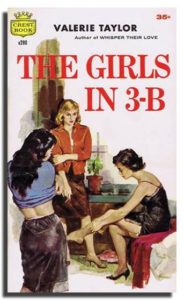
| Copyright Date | 1959 |
|---|---|
| Publication Date | April 1959 |
| Publisher | Crest Book |
| Format | Mass Market Paperback |
| No. of Pages | 159 |
| Language | English |
| Notes | Crest Book s290 A*** rating in Grier Copyright states Velma Tate |
| Rating | Great |
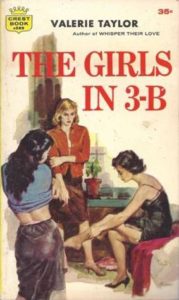
| Copyright Date | 1959 |
|---|---|
| Publication Date | January 1963 |
| Publisher | Crest Book |
| Format | Mass Market Paperback |
| No. of Pages | 159 |
| Language | English |
| Notes | Crest s589 A*** rating in Gr |
| Rating | Great |

| Copyright Date | 1959 |
|---|---|
| Publication Date | January 1963 |
| Publisher | Crest Book |
| Format | Mass Market Paperback |
| No. of Pages | 159 |
| Language | English |
| Notes | Crest s589 A*** rating in Gr |
| Rating | Great |
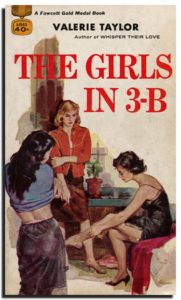
| Copyright Date | 1959 |
|---|---|
| Publication Date | 1965 |
| Publisher | Fawcett Gold Medal |
| Format | Mass Market Paperback |
| No. of Pages | 159 |
| Language | English |
| Notes | Gold Medal K1545 A*** rating in Grier |
| Rating | Great |
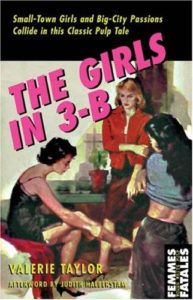
| ISBN | 1558614567 |
|---|---|
| Copyright Date | 1959 |
| Publication Date | November 1, 2003 |
| Publisher | Feminist Press at CUNY |
| Format | Trade Paperback |
| No. of Pages | 208 |
| Language | English |
| Notes | A*** rating in Gr |
| Rating | Great |

| ISBN | 9781558614567 |
|---|---|
| Copyright Date | 1959 |
| Publication Date | November 1, 2003 |
| Publisher | Femmes Fatales |
| Format | Trade Paperback |
| No. of Pages | 256 |
| Language | English |
| Notes | A*** rating in Grier |
| Rating | Great |
Comment
The Girls in 3-B was published by Fawcett Crest in 1959 with a cover by James Alfred Meese and reprinted by Gold Medal in 1965. Three eighteen-year-olds from a small Iowa town, Annice, Pat and Barby, move to Chicago to find jobs and a shared apartment. Annice falls in with the Beat crowd, Pat falls for her engaged boss, and Barby, after bad experiences with men, finds love with a woman.
Of the three, it is Barby, the lesbian, who is given the happiest ending, which was unusual in a lesbian pulp of the period. Marion Zimmer Bradley's Checklist called the book excellent and sympathetic, and critics have since praised its satire of Beat sexism and its frank handling of rape, abortion, racism and sexual harassment at work.
In 2003 it became one of the first three titles in the Feminist Press's Femmes Fatales series of women's pulp, with an afterword by Lisa Walker, who called Barby's story a remarkably positive portrayal of lesbian life. Ann Bannon wrote that it had achieved well-deserved classic status in the lesbian pulp canon.