In this sparkling collection of nineteen stories, the bestselling author of Slammerkin returns to contemporary affairs, exposing the private dilemmas that result from some of our most public controversies. A man finds God and finally wants to father a child-only his wife is now forty-two years old. A coach’s son discovers his sexuality on the football field. A roommate’s bizarre secret liberates a repressed young woman. From the unforeseen consequences of a polite social lie to the turmoil caused by the hair on a woman’s chin, Donoghue dramatizes the seemingly small acts upon which our lives often turn. Many of these stories involve animals and what they mean to us, or babies and whether to have them; some replay biblical plots in modern contexts. With characters old, young, straight, gay, and simply confused, Donoghue dazzles with her range and her ability to touch lightly but delve deeply into the human condition.
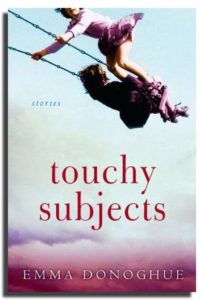
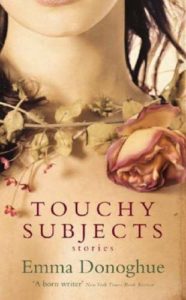
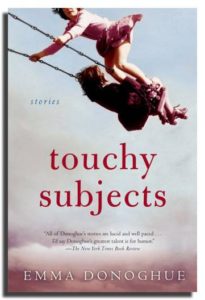
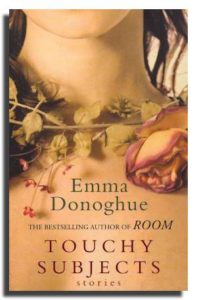
Touchy Subjects (Harcourt and Virago, 2006) is Emma Donoghue's collection of nineteen short stories about taboos, secrets and awkward situations, among them pregnancy, marriage and chance encounters between strangers. Not every story is about lesbians; at least one, The Sanctuary of Hands, first appeared in the anthology Telling Moments: Autobiographical Lesbian Short Stories (2003). Donoghue's own site says the collection was longlisted for the 2006 Frank O'Connor International Short Story Award and was a New York Times Editor's Choice, and the New York Times Book Review praised its versatility.

Comment
Touchy Subjects (Harcourt and Virago, 2006) is Emma Donoghue's collection of nineteen short stories about taboos, secrets and awkward situations, among them pregnancy, marriage and chance encounters between strangers. Not every story is about lesbians; at least one, The Sanctuary of Hands, first appeared in the anthology Telling Moments: Autobiographical Lesbian Short Stories (2003). Donoghue's own site says the collection was longlisted for the 2006 Frank O'Connor International Short Story Award and was a New York Times Editor's Choice, and the New York Times Book Review praised its versatility.