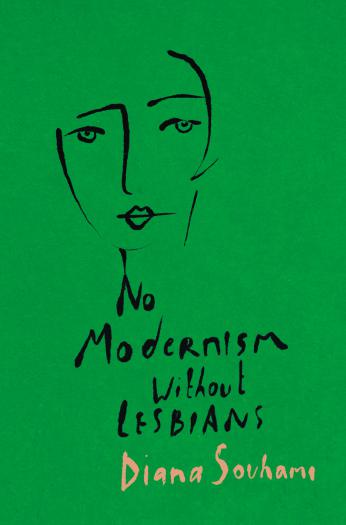
Some book titles describe. Some titles argue. Diana Souhami’s No Modernism Without Lesbians picks a fight on the cover and dares you to disagree.
The claim is simple. The literary and artistic revolution we call Modernism, the movement that gave us Joyce, Hemingway, Picasso and the rest, didn’t just happen to have some lesbians standing nearby. It needed them. Without a handful of women who loved women, living in Paris between the wars, a lot of the work we now study in school might never have been published, funded, discussed or written at all.
Souhami builds her case around four women. Sylvia Beach ran the Paris bookshop Shakespeare and Company and published James Joyce’s Ulysses in 1922, when no one else would touch it. Bryher was an English shipping heiress who poured her fortune into writers, artists and filmmakers. She also helped people escape the Nazis, and she was the longtime partner of the poet H.D. Natalie Barney was an American heiress whose Paris salon was one of the great meeting places of the era, and she made absolutely no secret of her love affairs with women. And Gertrude Stein was the writer and collector whose apartment was a required stop for any young artist arriving in Paris.
As the /books entry puts it, they covered the roles of trailblazing publisher, patron, society hostess and groundbreaking writer. Each rejected the rules she’d been raised with and built a life and a community on her own terms. Each also crossed paths with a dizzying cast of brilliant, shocking and badly behaved people, which makes for a lively read.
Souhami is well suited to the job. She has spent decades writing biographies of women like these, including books on Stein and Alice B. Toklas and on Radclyffe Hall’s obscenity trial. She knows the territory, and she writes with wit as well as research. Head of Zeus published this one in 2020, and at 432 pages it’s a substantial book, but the subject is gossip-rich enough that it moves.
The argument in the title is the part readers will debate. Is it fair to say there would be no Modernism without these women? Maybe Joyce would have found another publisher eventually. Maybe the painters would have found other patrons. But that misses Souhami’s real point. For a century, the standard story of Modernism has been told as a story of great men. The women who made their work possible got a footnote, if they were lucky. Souhami moves them to the center, where she thinks they belong.
This book is for readers of literary history, anyone who has visited Paris and wanted to know who lived behind which door, and lesbian readers looking for their place in a story that usually leaves them out.
If it sends you toward the primary sources, Stein’s Tender Buttons is in the bibliography too, and it’s a very short read. Understanding it is another story.
So, do you buy the title? Which of the four women would you most want to have dinner with, and which one would you be a little afraid of? And who else belongs on the list of women written out of art history?
Details are on the No Modernism Without Lesbians entry in the Lesbian Bibliography.