Black Interest

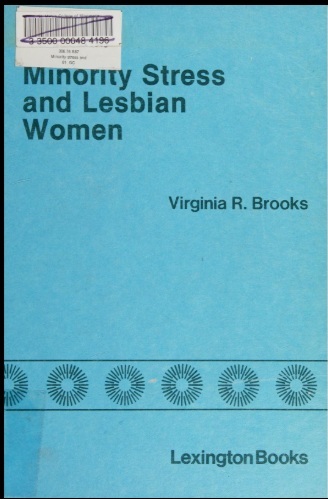
Minority Stress And Lesbian Women by Virginia R. Brooks
**Part I: Redefining the Problem**
**Introduction**
– Overview
– Terms and Definitions
**The Etiological Question**
– The Biological Argument
– Methodological Considerations
– The Psychoanalytic Argument
– The Socialization Argument
– The Sociocultural Response
**Sex Roles, Androgyny, and Mental Health**
– Concepts and Linkages
– Sex-Role Conformity versus Nonconformity: Comparative Outcomes
– Androgyny and Lesbian Women
**Stratification and Exclusion**
– Minority Status of Women
– Rationale for Minority Exclusion
– Social and Economic Exclusion of Lesbian Women
**Part II: Minority Stress: Theoretical and Empirical Model**
**The Theory of Minority Stress**
– Overview of Stress Theory
– Minority Status as Stressor
– Minority Stress and Problems in Measurement
**Stress-Response Variables among Lesbian Women**
– Stress Indexes
– Hypotheses
– Factors Associated with Negative and Positive Outcomes
– Need for Further Research
**Coping Resources**
– Defining Coping
– Stress-Mediating Resources
– Individual Responses and Minority-Group Patterns
– Model for Analysis of Minority-Stress Variables
**Part III: Redefining Self, Group, and Social Context**
**Identity Conflicts, Cognitive Dissonance, and Resolution**
– Faulty Premises and Self-Concept
– ‘Personal’ Identity versus ‘Lesbian’ Identity
– Reassessing Social Reality
**Intragroup Differences**
– Group Identity and Class Differences
– Upward and Downward Mobility
– Collective Diversity
**Social Disclosure**
– Stress of Disclosure versus Nondisclosure
– Variables in Disclosure Decisions
– Disclosure: The Personal Becomes Political
This Bridge Called My Back by Cherr e Moraga; Gloria Anzald a
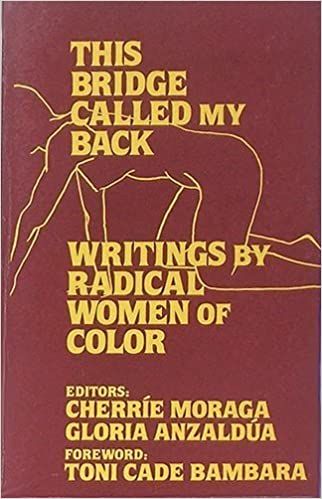
classic collection of feminist writings
This Bridge Called My Back Writings By Radical Women Of Color by Theresa A. Jones
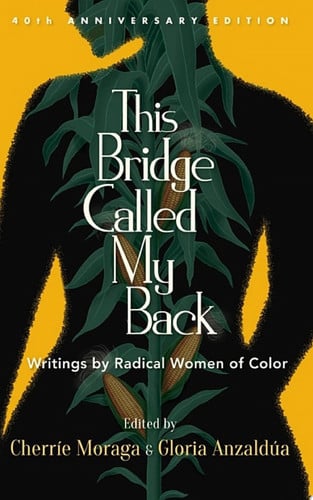
Fortieth anniversary edition of the foundational text of women of color feminism.Originally released in 1981, This Bridge Called My Back is a testimony to women of color feminism as it emerged in the last quarter of the twentieth century. Through personal essays, criticism, interviews, testimonials, poetry, and visual art, the collection explores, as coeditor Cherr e Moraga writes, ‘the complex confluence of identities-race, class, gender, and sexuality-systemic to women of color oppression and liberation.’Reissued here, forty years after its inception, this anniversary edition contains a new preface by Moraga reflecting on Bridge’s ‘living legacy’ and the broader community of women of color activists, writers, and artists whose enduring contributions dovetail with its radical vision. Further features help set the volume’s historical context, including an extended introduction by Moraga from the 2015 edition, a statement written by Gloria Anzald a in 1983, and visual art produced during the same period by Betye Saar, Ana Mendieta, Yolanda L pez, and others, curated by their contemporary, artist Celia Herrera Rodr guez. Bridge continues to reflect an evolving definition of feminism, one that can effectively adapt to and help inform an understanding of the changing economic and social conditions of women of color in the United States and throughout the world.