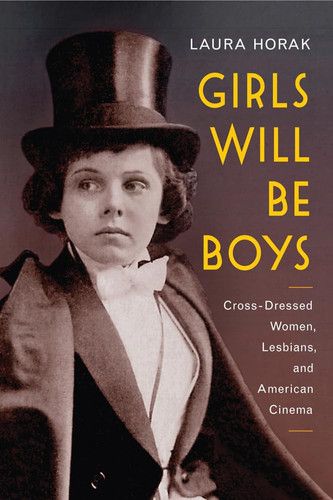
Marlene Dietrich, Greta Garbo and Katharine Hepburn made lasting impressions with their cinematic cross-dressing, but these performances of the 1930s came at the end of a long wave of more than 400 American films featuring women dressed as men. After a decade in film archives, Laura Horak finds that cross-dressed women in films made between 1908 and 1934 were not automatically seen as transgressive: in the 1910s they were considered wholesome and lent respectability to the young film industry. She explores how and why that perception changed in the 1920s and early 1930s, and how cinema shaped the representation of lesbian identity, from sentimental boyhood to rugged virility to gentlemanly refinement.
Details
| ISBN | 9780813574837 |
|---|---|
| Copyright Date | 2016 |
| Publication Date | February 26, 2016 |
| Publisher | Rutgers University Press |
| Format | Hardcover |
| No. of Pages | 311 |
| Language | English |
| Notes | 2016 Choice Outstanding Academic Title. Finalist, 2016 Richard Wall Memorial Award, Theatre Library Association. Long-listed, 2017 Kraszna-Krausz Foundation Best Photography Book Award. |
| Genre | Film and Television; History; Lesbian Studies |
| Subject | Lesbianism In Motion Pictures; Lesbians in motion pictures; Male Impersonators In Motion Pictures; Motion Pictures - History - United States; Sex Role In Motion Pictures |