The Color Purple by Alice Walker

The story of Celie, a poor black woman from the south, whose friendship with two women helps her overcome the brutality of her father and husbandSteven Spielberg, proving he’s one of the few modern filmmakers who has the visual fluency to be capable of making a great silent film, took a melodramatic, D.W. Griffith-inspired approach to filming Alice Walker’s novel. His tactics made the film controversial, but also a popular hit. You can argue with the appropriateness of Spielberg’s decision, but his astonishing facility with images is undeniable–from the exhilarating and eye-popping opening shots of children playing in paradisiacal purple fields to the way he conveys the brutality of a rape by showing hanging leather belts banging against the head of the shaking bed. In a way it’s a shame that Whoopi Goldberg, a stage monologist who made her screen debut in this movie, went on to become so famous, because it was, in part, her unfamiliarity that made her understated performance as Celie so effective. (This may be the first and last time that the adjective understated can be applied to Goldberg.) Nominated for 11 Academy Awards, including best picture and actress (supporting players Oprah Winfrey and Margaret Avery were also nominated), it was quite a scandal–and a crushing blow to Spielberg–when it won none.

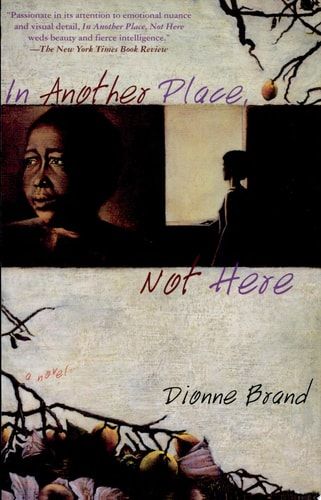
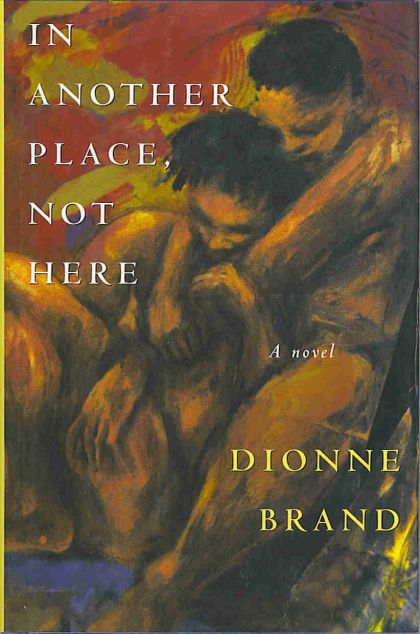
In Another Place, Not Here by Dionne Brand

Acclaimed by Adrienne Rich as ‘fierce, sensuous . . . a work of great beauty and moral imagination,’ In Another Place, Not Here tells of two contemporary Caribbean women who find brief refuge in each other on an island in the midst of political uprising. Elizete, dreaming of running to another place to escape the harshness of her daily life on the island, meets Verlia, an urban woman in constant flight who has returned to her island birthplace with hopes of revolution. Their tumultuous story moves between city and island, past and future, fantasy and reality. With all the lyrical intensity of a praisesong, Dionne Brand’s luminous debut novel, In Another Place, Not Here, tells of two contemporary Caribbean women one urban, passionate, and idealistic, the other constrained by disillusion and rural poverty, each in her own spiritual exile who find brief refuge in each other on an island in the midst of political uprising. Elizete dreams of running to another place to escape the harshness of her daily life on the island. Knowing better than to hope for much, she lives in a world of lush inventions that stave off reality. Then she meets Verlia, a woman in constant flight, who lives in Toronto and has returned to her island birthplace with hope of revolution. Both women are dreaming of each other’s reality and of each other. Their tumultuous story moves between city and island, between material and spiritual poverty, between fantasy and reality, in a past and future time where the dream is always, again, deferred.

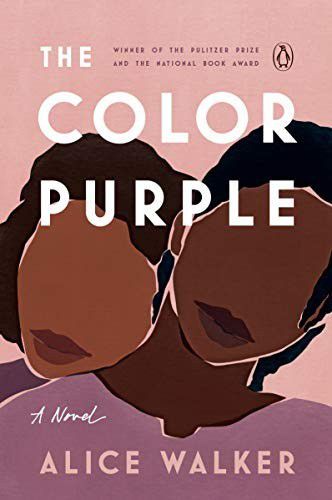
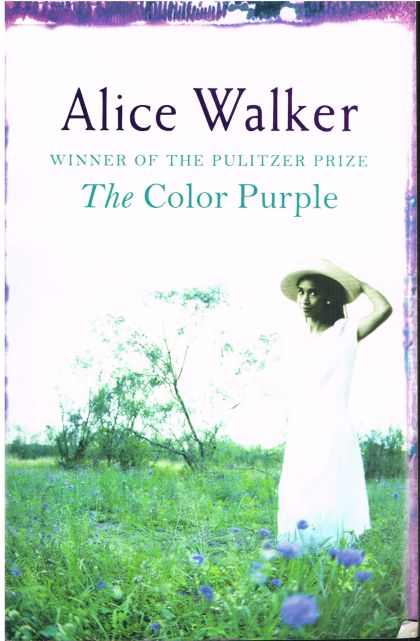
The Color Purple by Alice Walker

Read the original inspiration for the new, boldly reimagined film from producers Oprah Winfrey and Steven Spielberg, starring Taraji P. Henson, Danielle Brooks, and Fantasia Barrino.Celebrating its fortieth anniversary, The Color Purple writes a message of healing, forgiveness, self-discovery, and sisterhood to a new generation of readers. An inspiration to authors who continue to give voice to the multidimensionality of Black women s stories, including Tayari Jones, Honor e Fanonne Jeffers, Jesmyn Ward, and more, The Color Purple remains an essential read in conversation with storytellers today.Winner of the Pulitzer Prize and the National Book AwardA powerful cultural touchstone of modern American literature, The Color Purple depicts the lives of African American women in early-twentieth-century rural Georgia. Separated as girls, sisters Celie and Nettie sustain their loyalty to and hope in each other across time, distance, and silence. Through a series of letters spanning nearly thirty years, first from Celie to God, then from the sisters to each other, the novel draws readers into a rich and memorable portrayal of Black women their pain and struggle, companionship and growth, resilience and bravery.Deeply compassionate and beautifully imagined, The Color Purple breaks the silence around domestic and sexual abuse, and carries readers on an epic and spirit-affirming journey toward transformation, redemption, and love. Reading The Color Purple was the first time I had seen Southern, Black women s literature as world literature. In writing us into the world bravely, unapologetically, and honestly Alice Walker has given us a gift we will never be able to repay. Tayari Jones The Color Purple was what church should have been, what honest familial reckoning could have been, and it is still the only art object in the world by which all three generations of Black artists in my family judge American art. Kiese Laymon
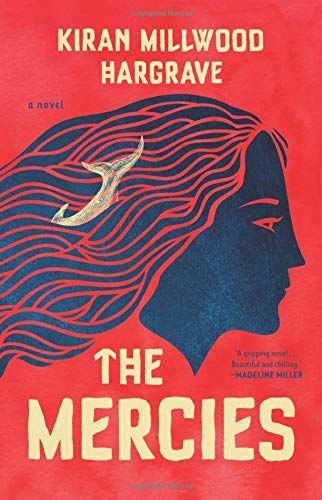
The Mercies by Kiran Millwood Hargrave

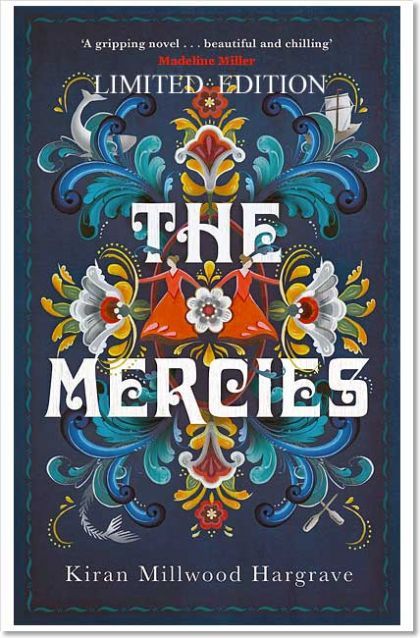
After the men in an Arctic Norwegian town are wiped out, the women must survive a sinister threat in this ‘perfectly told’ 1600s parable of ‘a world gone mad’ (Adriana Trigiani).Finnmark, Norway, 1617. Twenty-year-old Maren Magnusdatter stands on the craggy coast, watching the sea break into a sudden and reckless storm. Forty fishermen, including her brother and father, are drowned and left broken on the rocks below. With the menfolk wiped out, the women of the tiny Arctic town of Vard must fend for themselves.Three years later, a stranger arrives on their shore. Absalom Cornet comes from Scotland, where he burned witches in the northern isles. He brings with him his young Norwegian wife, Ursa, who is both heady with her husband’s authority and terrified by it. In Vard , and in Maren, Ursa sees something she has never seen before: independent women. But Absalom sees only a place untouched by God, and flooded with a mighty evil. As Maren and Ursa are drawn to one another in ways that surprise them both, the island begins to close in on them, with Absalom’s iron rule threatening Vard ‘s very existence. Inspired by the real events of the Vard storm and the 1621 witch trials, The Mercies is a story of love, evil, and obsession, set at the edge of civilization.

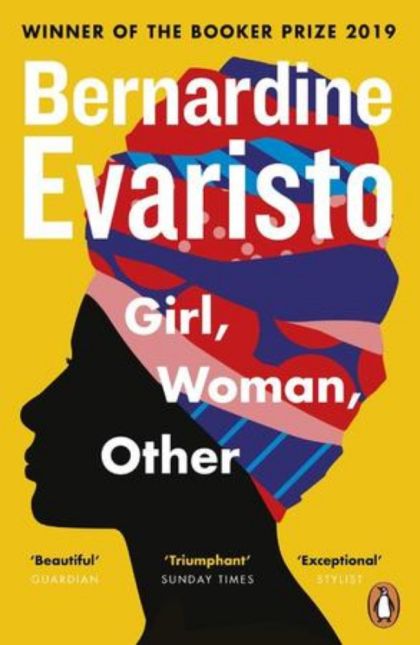
Girl, Woman, Other by Bernardine Evaristo

THE SUNDAY TIMES 1# BESTSELLER & BOOKER PRIZE WINNER This is Britain as you’ve never read it.This is Britain as it has never been told. From Newcastle to Cornwall, from the birth of the twentieth century to the teens of the twenty-first, Girl, Woman, Other follows a cast of twelve characters on their personal journeys through this country and the last hundred years. They’re each looking for something – a shared past, an unexpected future, a place to call home, somewhere to fit in, a lover, a missed mother, a lost father, even just a touch of hope . . . ‘The most absorbing book I read all year’ Roxane Gay ‘[Bernardine Evaristo] is one of the very best that we have’ Nikesh Shukla ‘Beautifully interwoven stories of identity, race, womanhood, and the realities of modern Britain. The characters are so vivid, the writing is beautiful and it brims with humanity’ Nicola Sturgeon ‘A choral love song to black womanhood in modern Great Britain’ Elle ‘Bernardine Evaristo can take any story from any time and turn it into something vibrating with life’ Ali Smith ‘Exceptional. You have to order it right now’ Stylist

The Mercies by Kiran Millwood Hargrave

The Sunday Times Bestseller and BBC Radio 2 Book Club Pick. For readers of Circe and The Handmaid’s Tale, Kiran Millwood Hargrave’s The Mercies is a story about a love that could prove as dangerous as it is powerful. Winter, 1617. The sea around the remote Norwegian island of Vard is thrown into a reckless storm. A young woman, Maren, watches as the men of the island, out fishing, perish in an instant. Vard is now a place of women. Eighteen months later, a sinister figure arrives. Summoned from Scotland to take control of a place at the edge of the civilized world, Absalom Cornet knows what he needs to do to bring the women of the island to heel. With him travels his young wife, Ursa. In her new home, and in Maren, Ursa finds something she has never seen before: independent women. But Absalom sees only a place flooded with a terrible evil, one he must root out at all costs . . . ‘Beautiful and chilling’ – Madeline Miller, author of Circe ‘Took my breath away’ – Tracy Chevalier, author of Girl with a Pearl Earring

We Are Okay by Nina LaCour

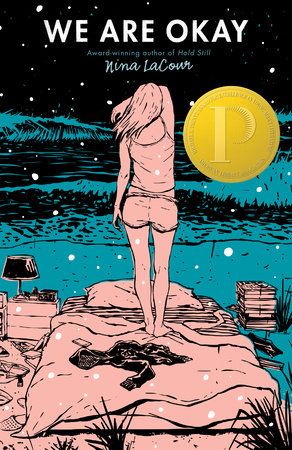
NATIONAL BESTSELLER An achingly beautiful novel about grief, the enduring power of friendship, and the healing effects of kindness, from the award-winning author of Hold StillWINNER OF THE MICHAEL L. PRINTZ AWARD ONE OF TIME S BEST YOUNG ADULT BOOKS OF ALL TIME KIRKUS REVIEWS BEST YOUNG ADULT BOOK OF THE CENTURY Short, poetic and gorgeously written . . . The world LaCour creates is fragile but profoundly humane. The New York Times Book ReviewYou go through life thinking there s so much you need. . . .

Until you leave with only your phone, your wallet, and a picture of your mother. Marin hasn t spoken to anyone from her old life since the day she left everything behind. No one knows the truth about those final weeks not even her best friend, Mabel. But even thousands of miles away from the California coast, at college in New York, Marin still feels the pull of the life and tragedy she s tried to outrun. Now, months later, alone in an emptied dorm for winter break, Marin waits. Mabel is coming to visit, and Marin will be forced to face everything that s been left unsaid and finally confront the loneliness that has made a home in her heart.An intimate whisper that packs an indelible punch, We Are Okay is Nina LaCour at her finest. This gorgeously crafted and honest portrayal of grief will leave readers urgent to reach across any distance to reconnect with the people they love.

Far From You by Tess Sharpe

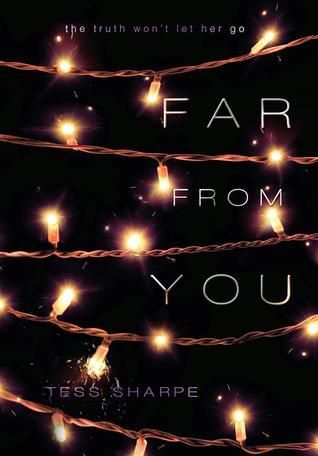
‘This beautifully realized debut delves into the emotions of a girl recovering from drug addiction and grief, all wrapped up in a solid mystery.’ -Kirkus Reviews (starred review)

Sophie Winters nearly died. Twice. The first time, she’s fourteen, and escapes a near-fatal car accident with scars, a bum leg, and an addiction to Oxy that’ll take years to kick. The second time, she’s seventeen, and it’s no accident. Sophie and her best friend Mina are confronted by a masked man in the woods. Sophie survives, but Mina is not so lucky. When the cops deem Mina’s murder a drug deal gone wrong, casting partial blame on Sophie, no one will believe the truth: Sophie has been clean for months, and it was Mina who led her into the woods that night for a meeting shrouded in mystery. After a forced stint in rehab, Sophie returns home to a chilly new reality. Mina’s brother won’t speak to her, her parents fear she’ll relapse, old friends have become enemies, and Sophie has to learn how to live without her other half. To make matters worse, no one is looking in the right places and Sophie must search for Mina’s murderer on her own. But with every step, Sophie comes closer to revealing all: about herself, about Mina and about the secret they shared.

Juliet Takes A Breath by Gabby Rivera

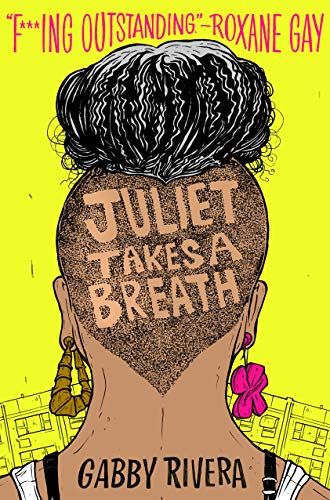
‘F***ing outstanding.’–Roxane Gay, New York Times bestselling authorJuliet Milagros Palante is a self-proclaimed closeted Puerto Rican baby dyke from the Bronx. Only, she’s not so closeted anymore. Not after coming out to her family the night before flying to Portland, Oregon, to intern with her favorite feminist writer–what’s sure to be a life-changing experience. And when Juliet’s coming out crashes and burns, she’s not sure her mom will ever speak to her again. But Juliet has a plan–sort of. Her internship with legendary author Harlowe Brisbane, the ultimate authority on feminism, women’s bodies, and other gay-sounding stuff, is sure to help her figure out this whole ‘Puerto Rican lesbian’ thing. Except Harlowe’s white. And not from the Bronx. And she definitely doesn’t have all the answers . . . In a summer bursting with queer brown dance parties, a sexy fling with a motorcycling librarian, and intense explorations of race and identity, Juliet learns what it means to come out–to the world, to her family, to herself.

A fist-pumping intersectional feminist power anthem with powerful ideas about sexual, racial, and political identity.
The book addresses white privilege and unintentional racism within feminist circles.